By Kevin
AI Disclosure Statement Example for Students: 5 Templates (2026)
Learn how to write an AI disclosure statement for student assignments with 5 copy-paste templates, syllabus compliance rules, APA/MLA guidance, and draft verification.
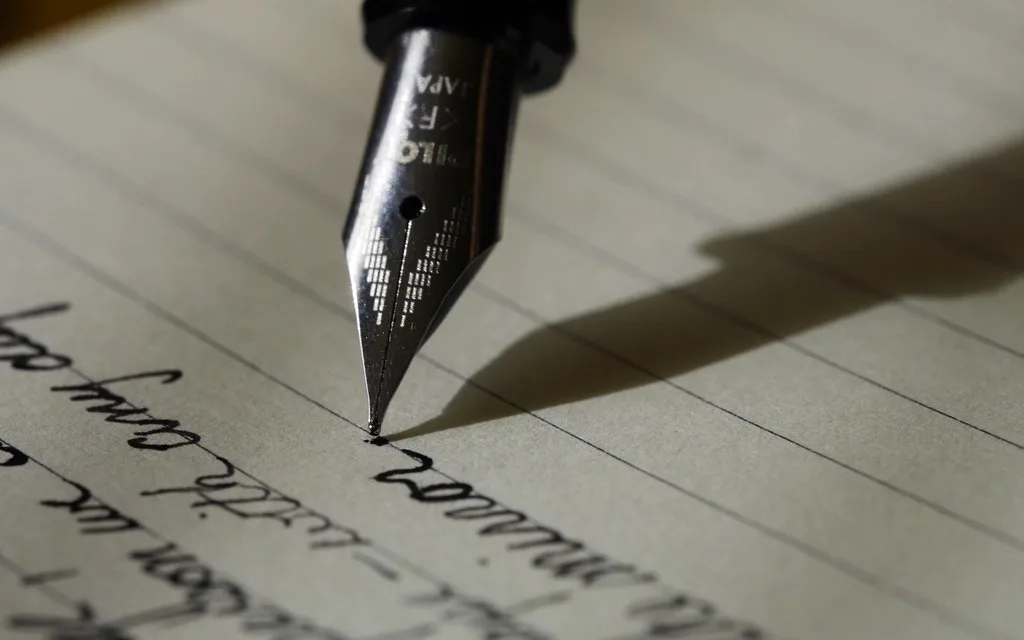
An AI disclosure statement for students is a formal note included with an academic paper or assignment that transparently details which artificial intelligence tools were consulted, the specific tasks they assisted with, and how the student verified the final work. To write an effective disclosure, state the exact tool and version, describe the scope of assistance, specify which sections were affected, and confirm personal accountability for all factual claims and citations.
As universities and colleges establish formal artificial intelligence policies for the 2026 academic year, the boundary between ethical writing assistance and academic dishonesty centers on transparency. Instructors routinely permit language models for initial brainstorming, literature searching, or grammar checking, provided that students document their workflow. When students conceal AI assistance, they risk disciplinary reviews under institutional honor codes, even if their contribution was substantial.
Conversely, a clear disclosure statement protects you against misunderstanding. Automated detectors in learning management systems frequently misidentify non-native English or structured academic prose as machine-generated. Pairing a written disclosure with your initial outline and prompt log proves how your draft was created.
Below, you will find five copy-ready disclosure templates tailored to common academic scenarios, placement instructions, formatting guidance, and an audit workflow to verify your paper before submission.
What are the 4 essential elements of a student AI disclosure statement?
Whether you write a single paragraph or a comprehensive appendix, every valid student AI disclosure statement must communicate four core components:
- Tool identification and version: Specify the platform name, creator, and model version used. For example, write "ChatGPT (GPT-4o, OpenAI)" or "Claude 3.5 Sonnet (Anthropic)" rather than a vague label like "AI software."
- Specific functional scope: Detail exactly what the model did. Distinguish clearly between ideation (brainstorming thesis angles), technical editing (proofreading syntax and commas), summarization (condensing background papers), or drafting specific illustrative examples.
- Location and extent within the document: Indicate where the tool was applied. Clarify whether assistance was limited to Section 2 (Methodology), used across the entire draft for grammar refinement, or confined to generating exploratory Python scripts.
- Student accountability pledge: State unequivocally that you personally reviewed, verified, and edited all generated concepts. Confirm that you checked every factual claim, calculation, and citation against primary literature, and that you take full responsibility for the finished submission.
| Disclosure Element | Required Information | Example Phrasing |
|---|---|---|
| Tool & Version | Software name, developer, model release | "ChatGPT (GPT-4o architecture, OpenAI)" |
| Functional Scope | Specific tasks performed by the model | "Brainstorming topic outlines and finding counterarguments" |
| Location & Extent | Exact sections or draft stages involved | "Applied to Section 1.2; all body prose composed independently" |
| Accountability | Verification confirmation and integrity pledge | "All data verified against primary sources; author takes full responsibility" |
5 copy-paste AI disclosure statement examples for students
Select the template below that matches your permitted level of AI assistance. Replace the bracketed text with your specific assignment details.
Template 1: Brainstorming, ideation, and outlining only
Use this template when you used an artificial intelligence model strictly to explore topic ideas, organize your outline, or suggest counterarguments, but wrote every sentence of the draft yourself.
AI Disclosure Statement: Brainstorming & Outlining Assistance
During the preparation of this assignment, I consulted [Tool Name and Version, e.g., ChatGPT-4o by OpenAI] to assist with initial brainstorming and structural outlining. Specifically, the tool was prompted to suggest alternative perspectives on [Topic/Question] and propose organizational headings for a multi-part argument.

No text produced by the model was copied or adapted into the final submission. All research, argument synthesis, and prose were composed independently. I take full academic responsibility for the integrity, structure, and conclusions presented in this work.
Template 2: Grammar, syntax, and style proofreading
Use this template when you wrote the original draft independently and used AI-powered editing tools (such as Grammarly, Claude, or Unflag) to refine punctuation, correct grammatical errors, or smooth clunky phrasing.
AI Disclosure Statement: Grammar and Style Editing
I utilized [Tool Name, e.g., Grammarly / Claude 3.5 Sonnet by Anthropic / Unflag Rewrite] solely for language editing, grammatical correction, and syntax refinement across [the entire draft / Sections 2 and 3].

The tool was not employed to generate ideas, draft substantive arguments, or locate external evidence. All suggestions were manually reviewed, selected, and edited by the author. The core arguments and original composition remain entirely my own, and I accept full responsibility for the final text.
Template 3: Literature search and background summarization
Use this template when you used a language model to explain complex theoretical concepts, suggest relevant search queries, or summarize public domain background readings, provided you verified the underlying literature yourself.
AI Disclosure Statement: Research and Concept Summarization
In developing this paper, [Tool Name and Version, e.g., Perplexity / Microsoft Copilot] was used as a preliminary research assistant to locate relevant terminology and summarize background literature concerning [Research Topic].

The model was not cited as an academic source. Every referenced study, empirical finding, and quotation was independently retrieved from primary scholarly databases (e.g., JSTOR, Google Scholar) and verified prior to inclusion. All written summaries reflect my own analysis and synthesis.
Template 4: Collaborative co-pilot drafting (where permitted by syllabus)
Use this template only when your instructor's syllabus explicitly permits collaborative text generation for designated exercises, such as comparing human and machine prose or co-writing technical documentation.
AI Disclosure Statement: Collaborative Drafting
In accordance with the course syllabus guidelines for [Course Name/Assignment], generative artificial intelligence was incorporated into the drafting process. [Tool Name and Version] was used to draft initial preliminary paragraphs for [specific section, e.g., Appendix B / Case Study Scenario].

The raw machine output underwent substantial human revision: factual claims were cross-referenced, tone was adjusted to meet scholarly standards, and inaccurate statements were removed. A complete log of prompts and unedited outputs is attached in Appendix A. I am fully accountable for the accuracy and validity of the final submission.
Template 5: Statement of non-use (zero AI verification)
Use this template when your course syllabus mandates an explicit verification statement confirming that no generative artificial intelligence was used at any stage of your research or writing.
AI Disclosure Statement: Declaration of Independent Work (Zero AI Use)
I declare that no generative artificial intelligence tools (including but not limited to ChatGPT, Claude, Copilot, or automated paraphrasers) were utilized in the ideation, research, drafting, or editing of this submission.

All concepts, literature analyses, experimental interpretations, and written prose were produced solely through my independent effort, using standard word processing software and primary scholarly references.
How does an AI disclosure statement differ from an APA or MLA citation?
Students frequently confuse citing AI with disclosing AI. While both practices promote academic honesty, they serve distinct purposes in scholarly writing:
- Formal citation (APA 7, MLA 9, Chicago): A citation is required when you directly quote, paraphrase, or reference specific output generated by a language model within your text. For instance, if you quote an analogy generated by ChatGPT, you must provide an in-text attribution and a corresponding reference list entry, as detailed in our guide on how to cite ChatGPT in APA 7.
- AI disclosure statement: A disclosure statement is a meta-commentary on your overall writing methodology. It informs your evaluator how digital tools functioned as cognitive aids or editorial assistants throughout your project lifecycle.
In many assignments, you will provide a disclosure statement even when your reference list contains zero AI citations. If you used Claude to brainstorm five essay topics or utilized an editing tool to fix run-on sentences, you do not cite the software as an academic author. Instead, you declare the editorial assistance in your disclosure statement.
Difference at a glance:
- Citation: Attributes specific words, algorithms, or code in your reference list.
- Disclosure: Describes the process and tools used to draft, revise, or organize the paper.
Where should you place an AI disclosure statement in your paper?
Consult your course syllabus or assignment rubric first, as department conventions vary. When specific institutional instructions are absent, adopt one of three standard placements:
Option 1: On the title page or header block
For short essays, weekly response papers, or lab memos, place the disclosure directly on the first page. Position a brief, boxed note beneath your name, course title, and submission date:
Jane Doe
Professor Miller | POL 301
November 29, 2026

AI Disclosure: ChatGPT-4o was consulted solely to brainstorm preliminary outline headings. All research and prose were written independently.
Option 2: In a dedicated Acknowledgments section
For term papers, capstone theses, or dissertations, insert a dedicated "AI Acknowledgments" or "Author Note" heading immediately following your conclusion and preceding your bibliography. This allows room for a detailed multi-sentence description of tools, prompt strategies, and verification methodologies.
Option 3: In a prompt transcript appendix
For technical assignments, programming projects, or exploratory writing classes where AI engagement is graded, append a full prompt transcript. Place your summary disclosure statement at the top of the appendix, followed by a numbered table recording each prompt, the date accessed, the raw output, and how you modified the response.
Why disclosure protects students against false AI detector accusations
Automated AI detectors operate by calculating statistical probabilities: perplexity (how unpredictable word choices are) and burstiness (how sentence lengths vary across a passage). As documented in our analysis of how Turnitin detects AI, these metrics often flag authentic human writing.
Formal academic prose naturally exhibits lower perplexity and consistent grammatical structures, particularly among non-native English speakers who adhere strictly to formal syntax rules. Consequently, high originality scores from automated checkers do not prove academic dishonesty. For a detailed breakdown of these false flags, read why does my writing get flagged as AI.
A proactive AI disclosure statement establishes a verifiable audit trail before an instructor reviews your work:
- It demonstrates good faith: Students seeking to cheat attempt to conceal automated tools. An upfront declaration signals honest engagement and academic maturity.
- It contextualizes detector reports: If a classroom detector in Canvas flags your paper because you used an AI proofreader for commas, your disclosure statement already explains that editorial assistance, preventing an immediate accusation of misconduct. Review our breakdown on whether Canvas has an AI detector to understand how learning management systems process submission logs.
- It coordinates with version history: When your disclosure matches the incremental draft saves in Google Docs or Microsoft Word, you possess incontrovertible evidence of authentic authorship.
How to verify and audit your draft with Unflag before submitting
Before adding your disclosure statement and submitting your assignment, audit your draft to ensure that your arguments are sound, your style is natural, and your factual claims are backed by authentic sources.
Step 1: Self-check sentence burstiness with Unflag AI Detector
If you used AI tools for brainstorming or structural outlining, your prose may inadvertently absorb the rhythmic monotony characteristic of language models. Language models tend to generate uniform, mid-length sentences linked by predictable transition words like "furthermore," "moreover," and "in conclusion."
Run your text through Unflag's AI Detector on the web workspace. The detector evaluates your text across sentence-level perplexity and burstiness markers, highlighting rigid passages that lack human rhythm. If certain paragraphs read stiffly, learn how to sound more academic without sounding like AI by varying sentence structures, using active analytical verbs, and grounding claims in specific evidence.
Step 2: Audit empirical claims and references with Unflag Fact Check
Language models frequently hallucinate non-existent studies, misattribute quotations, and generate plausible-sounding but fictitious statistics. Never rely on an AI tool to confirm its own factual accuracy.
Use Unflag's Fact Check tool to verify every empirical assertion:
- Automated claim parsing: Unflag scans your draft to detect specific, testable statements, such as historical dates, experimental percentages, and author names.
- Live web verification: The system checks extracted assertions against credible live web sources and academic documentation.
- Objective verdicts: You receive ratings (True, False, Partially True, Misleading, or Unverifiable) alongside direct primary source links and confidence scores.
Unflag Fact Check is included for Unflag Plus subscribers ($8.99 monthly or $45.99 annually on the web workspace as of November 2026), providing an essential safety check for research papers.
Step 3: Polish clunky syntax with Unflag Rewrite and Fact Lock
When revising awkward sentences flagged during editing, traditional online paraphrasers often corrupt critical terminology, drop numbers, or alter historical dates.
Unflag's Rewrite tool features an integrated Fact Lock algorithm. Fact Lock maps dates, proper nouns, numerical measurements, and citations before restructuring the sentence, ensuring your factual foundations remain intact while improving clarity.
You can audit your drafts directly on the web or use the companion mobile apps for iPhone and Android to review your assignments on the go.
Checklist: 6 steps before submitting an assignment with AI disclosure
Before you click submit on your course portal, review your document against this 6-point submission checklist:
- Review the course syllabus policy: Confirm that your instructor's policy permits the specific type of AI assistance you used. If the syllabus is ambiguous, request written clarification before submission.
- Select the accurate disclosure template: Match your statement to your real workflow. Never use an "Ideation Only" template if you accepted automated syntax or paragraph rewrites.
- Verify every fact and quotation: Check all names, dates, calculations, and citations against primary scholarly databases. Confirm that no hallucinated sources remain in your bibliography.
- Inspect sentence variety and rhythm: Read your paper aloud or run it through Unflag's AI Detector to ensure your prose exhibits natural cadence rather than mechanical monotony.
- Position the statement correctly: Place the disclosure on your title page, within your Acknowledgments section, or in an attached appendix according to instructor preference.
- Archive draft history and prompt transcripts: Save your incremental document versions, outline notes, and prompt transcripts in an archive folder. Having timestamped evidence readily accessible resolves any post-submission questions quickly.
Frequently asked questions
What is an AI disclosure statement for students?
An AI disclosure statement is a formal declaration included with an academic submission detailing which artificial intelligence tools were used, the exact scope of assistance (such as brainstorming, grammar editing, or code debugging), where the tools were applied, and confirming that the student verified all content independently.
Is an AI disclosure statement the same as an APA or MLA citation?
No. A citation credits specific words, quotes, or outputs in your reference list and body text under formal style guides like APA 7 or MLA 9. A disclosure statement documents your broader methodological process, declaring how AI assisted your thinking, drafting, or editing to comply with university academic integrity rules.
Where should you place an AI disclosure statement in a paper?
Depending on course guidelines, place the statement on your title page under the author details, in a dedicated Acknowledgments section immediately preceding your References list, or in an appendix containing your prompt transcripts.
Will submitting an AI disclosure statement lower your grade?
Not if your instructor permits AI assistance for that assignment. Transparency demonstrates scholarly integrity and adherence to course policies. Concealing AI use, conversely, can lead to academic integrity investigations even if the underlying ideas are sound.
What should you do if your course has a zero AI policy?
If your syllabus prohibits all generative AI, you should not use AI tools for any drafting or revision. In that case, use a Statement of Non-Use to formally declare that all ideas, text, and research were produced independently without AI assistance.
How does Unflag help students audit their drafts before submission?
Unflag provides an AI Detector to evaluate sentence burstiness and perplexity signals, a Fact Check tool to verify empirical assertions against live web sources, and a Rewrite tool with Fact Lock to preserve numbers, citations, and terminology during revisions.
More from Unflag
View allHow to Tailor a Resume With AI: A Step-by-Step Guide (2026)
How to tailor your resume with AI without sounding like a robot. Practical prompts, the CAR bullet formula, 8 banned buzzwords, and an audit checklist.
How to Cite ChatGPT in APA 7: Format, Examples, and Rules (2026)
Learn how to cite ChatGPT in APA 7th edition with official reference templates, parenthetical and narrative in-text examples, prompt disclosures, and fact-checking rules.
Does Canvas Have an AI Detector? How It Works (2026)
Does Canvas detect AI writing? How Instructure Canvas handles student submissions, what third-party LMS integrations actually check, and what Canvas logs.
How to Sound More Academic Without Sounding Like AI (2026)
Learn how to sound more academic without sounding like AI by replacing generic buzzwords with precise terminology, varying syntax, and grounding claims in data.