By Unflag Team
Anaphora Sentence Examples: 8 Lines and Why They Work
Anaphora sentence examples from Dickens, Churchill, King and the Bible, with what each repetition does and how to use it in your own writing.
Anaphora sentence examples do more than decorate a speech. They train the reader to expect the next clause before it arrives, so the new detail hits harder. A search of the 100-million-word British National Corpus found the substitute "one" in about 3.97% of sentences, and a broader extraction estimated one-anaphora in 6.25% of sentences in that material, according to a corpus study in the ACL Anthology. Repetition at scale isn't a curiosity. It's how English stays short.
Rhetorical anaphora repeats a word or phrase at the start of clauses. Grammatical anaphora is the quiet version, where "she," "it," or "one" borrows meaning from an earlier expression. Most lists stop at podiums. The lines below pair the classics with drafts you mark up, including the robotic opener problem in AI-assisted writing.
Eight examples follow, from Dickens and Churchill to Ecclesiastes and a cover letter. For each one, the repeated words come first, then the effect, then one edit you can use today. Keep the repetition that marks a real shift. Vary every opener that doesn't.
Table of Contents
- 1. Charles Dickens, "It Was the Best of Times, It Was the Worst of Times"
- 2. Winston Churchill, "We Shall Fight on the Beaches"
- 3. Martin Luther King Jr., "I Have a Dream"
- 4. Ecclesiastes 3, "A Time to Be Born, and a Time to Die"
- 5. Epistrophe Contrast, "Yes, We Can" Against Anaphora
- 6. Anaphora in Business Email and Cover Letters
- 7. Anaphora in AI-Generated Drafts, Spotting and Fixing Repetitive Openers
- 8. Anaphora in Everyday Writing, Blog Posts, Essays, and Reports
- How the eight anaphora examples compare
- Use Anaphora on Purpose and Check Every Draft
- Anaphora Sentence Examples, Common Questions
1. Charles Dickens, "It Was the Best of Times, It Was the Worst of Times"
Dickens opens A Tale of Two Cities (1859) with a frame you can hear on the first clause.
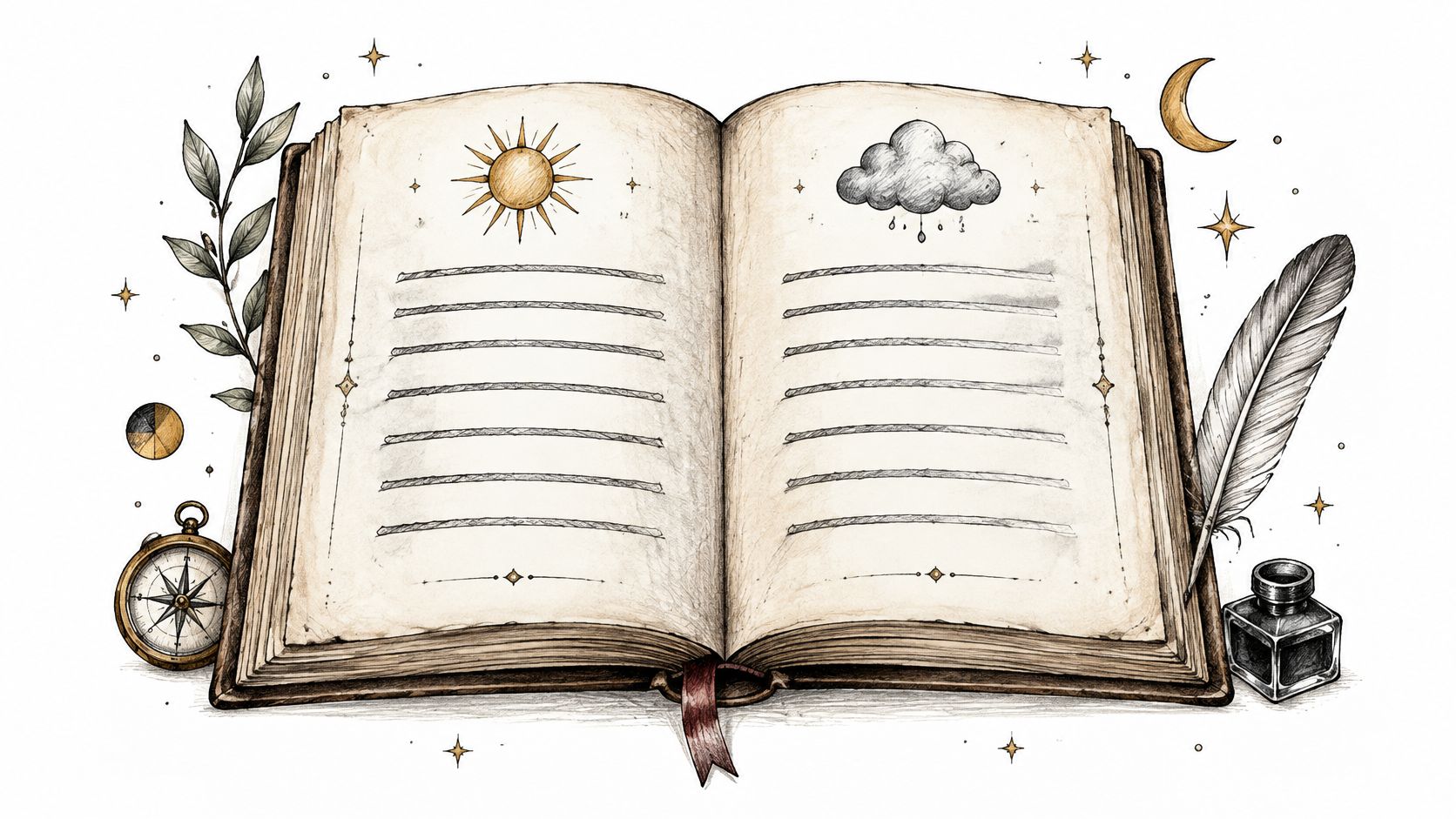
"It was the best of times, it was the worst of times, it was the age of wisdom, it was the age of foolishness..."
"It was the" is the signal. What follows flips each time, best against worst, wisdom against foolishness. The repeated words don't add facts. They time the contrast so the opposition lands on the beat.
The pattern is older than the novel. By 1589, George Puttenham was already describing repetition that makes one word "lead" several lines, with "To thinke" starting successive lines, in the history traced by a De Gruyter chapter on anaphora. Dickens uses a clause where Puttenham used a poetic line. Same job.
Mark the contrast, then stop
Underline the opener. Then list only what changes after it. If nothing contrasts, you don't have this device. You have a stutter. Quote the full clause in an essay. A clipped "best of times" hides the repetition your reader needs to see. Break accidental copies. If an AI draft stacks "It was the" with no real opposition, vary the rhythm in Unflag's AI Humanizer. Paste your text into Unflag's AI Humanizer, it's free.
Say a reflection starts, "It was a hard semester, it was a useful semester." Two clauses, one frame, a true opposition. Six clauses with no flip is costume.
2. Winston Churchill, "We Shall Fight on the Beaches"
On 4 June 1940, Churchill built a climb out of places, not adjectives.
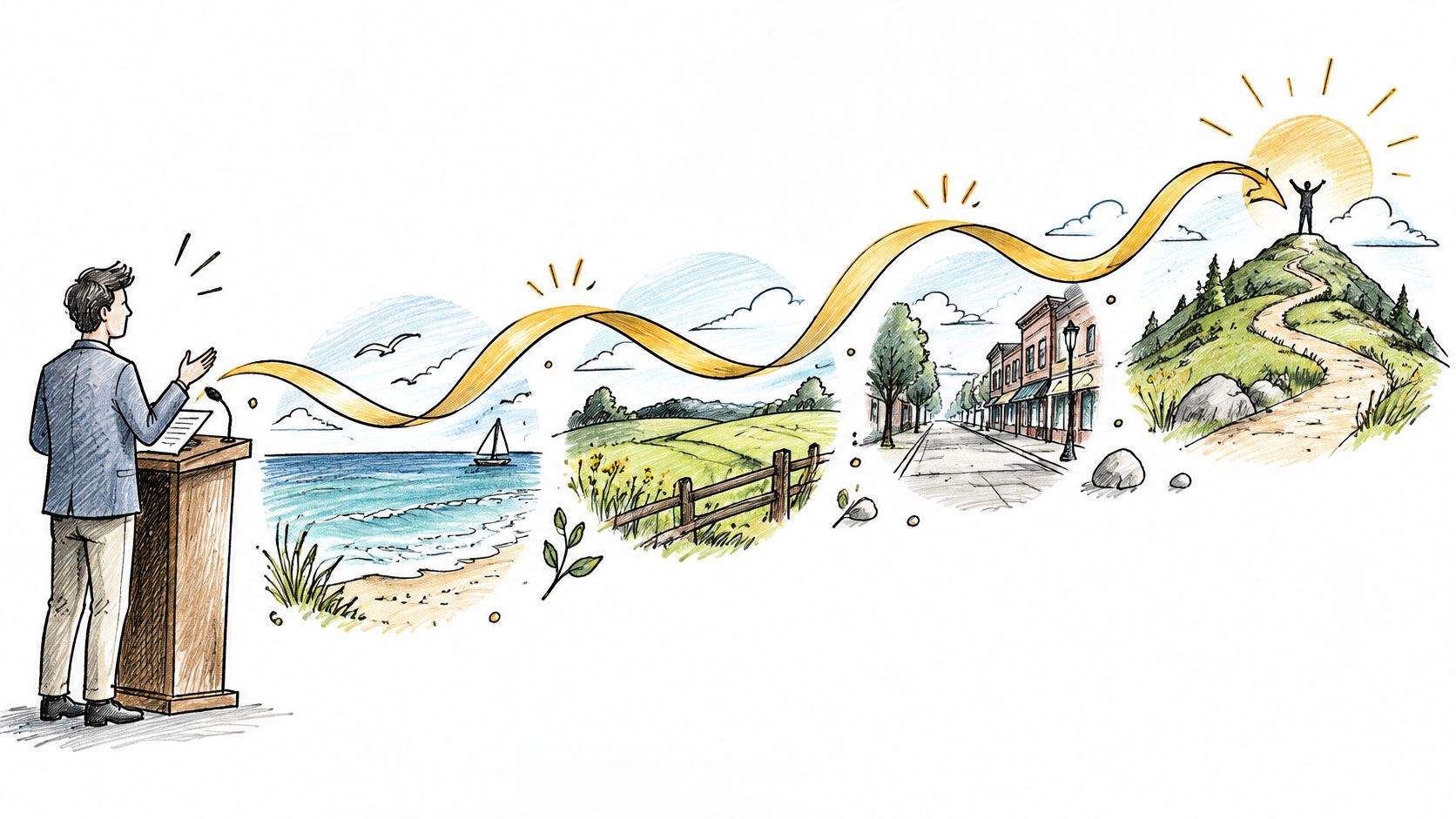
"We shall fight on the beaches, we shall fight on the landing grounds, we shall fight in the fields and in the streets, we shall fight in the hills; we shall never surrender."
"We shall fight" stays fixed. Beaches, landing grounds, fields, streets, and hills change. A bare list would be a map. The opener turns the map into defiance, and "we shall never surrender" breaks the pattern so the promise feels earned.
Practical rule: Four or five beats, then a break. Past that, a wartime speech still works and a status email does not.
Confirm the words. Read the speech in Hansard before you quote it. Memory edits famous lines. Raise one detail per clause. Place, stake, or proof. Don't repeat the opener and also repeat the point. Cut early at work. Two or three clauses carry force. A longer chain reads as overwrought in a memo.
A pitch close can borrow the shape without the length. "We will fix the login bug. We will fix the empty states. We ship Friday." The third line steps off the drum.
3. Martin Luther King Jr., "I Have a Dream"
At the March on Washington on 28 August 1963, King files picture after picture under one claim.
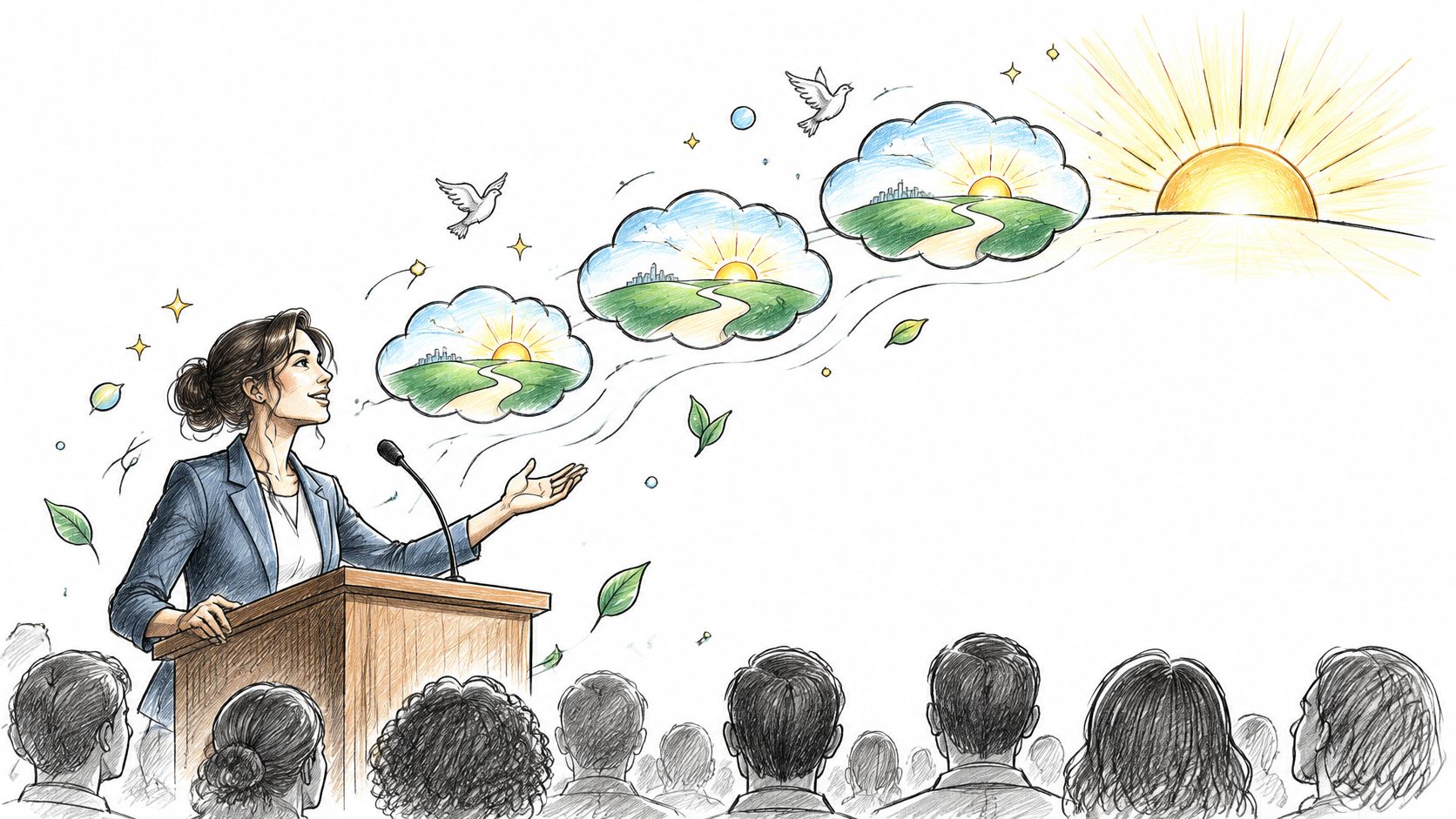
"I have a dream that one day this nation will rise up and live out the true meaning of its creed."
"I have a dream" doesn't move. The image does. You can follow the argument because the phrase is stable, and you feel the stakes because each return adds a new scene. Spoken, the beat is easy to track. That's why the speech still teaches pacing better than a definition does.
Many pages treat anaphora as only this repeated opening. Linguistics also uses the word for any expression that depends on earlier context, so "She submitted the essay" is anaphoric when "she" points back to someone already named, as a discourse-reference analysis lays out. Learn only the speech version and you'll mislabel ordinary pronouns.
Listen beside the transcript. Pace is part of the effect. Print flattens it. Group related images. One opener, several pictures. Unrelated sentences shouldn't share the phrase. Catch stencil rhythm. The Unflag AI Detector flags drafts whose openings have gone formulaic.
4. Ecclesiastes 3, "A Time to Be Born, and a Time to Die"
Britannica treats Ecclesiastes 3:1–2 as a classic. "For everything there is a season" sets the frame, then the lines repeat openings such as "a time to be born" and "a time to die," in Britannica's account of anaphora.
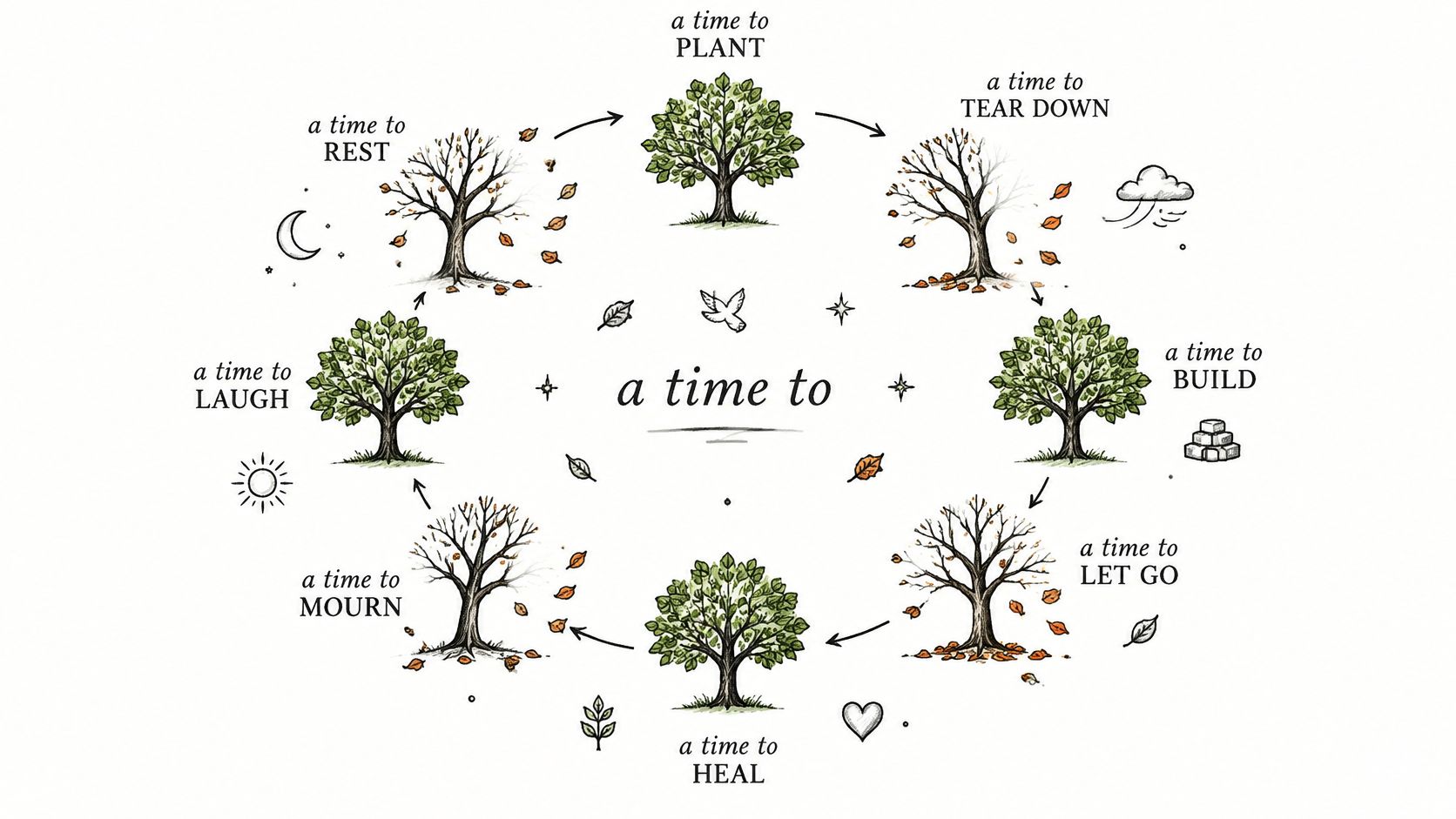
The line students quote is King James, verse 2.
"A time to be born, and a time to die; a time to plant, and a time to pluck up that which is planted."
"A time to" holds a long list of opposites in one pattern. Birth and death, planting and plucking. Same grammar every time, so the poem feels weighed rather than piled. Break one line's shape and the set looks unfinished. That consistency is the part worth stealing for parallel structure in reports.
Pairs, not a pile
Cite verse and translation so a reader can check the wording on Bible Gateway.
Match the grammar. "A time to plan, and a time to ship" holds. "A time to plan, and then we shipped late" snaps the pattern. Stop at a few pairs. Reflective tone dies when the list becomes a catalogue. Use it for balance, not hype. Opposites calm a paragraph. They don't sell a feature.
A retrospective can run, "A time to hire, and a time to cut. A time to experiment, and a time to standardize." Then a normal sentence. Four beats, done.
5. Epistrophe Contrast, "Yes, We Can" Against Anaphora
Anaphora repeats at the start of a clause. Epistrophe repeats at the end. Obama's 2008 New Hampshire refrain, "yes we can," closes the line. That's epistrophe. Both devices repeat. Position decides the name, and the effect.
Anaphora launches the next clause.
"We can change the way we work. We can change the way we learn. We can change the way we lead."
Epistrophe shuts it.
"We can do it, and we will do it. Yes, we can."
Anaphora pulls the reader forward. Epistrophe lands the conclusion. The Silva Rhetoricae entry at BYU defines the rhetorical device as repetition at the beginning of successive clauses, sentences, or lines, with Shakespeare's "This royal throne," "this sceptred isle," "This earth," and "this seat." Capitals shift. The repeated opening doesn't.
Grammar uses the same word for reference, not for openings. In "He said he was ill," "he" is the anaphor and a name such as "John" can be the antecedent, including across sentences, in the Stanford Encyclopedia of Philosophy. In an essay, say which sense you mean.
Test the slot. If the repeat opens, it's anaphora. If it closes, it's epistrophe. Draft both in one breath. You'll hear emphasis move from launch to landing. Trust a transcript. Quotation blogs smooth famous speeches.
Either device fails when the clauses aren't parallel. This note on correct parallel structure shows the grammar those openings need.
6. Anaphora in Business Email and Cover Letters
A repeated verb can help a hiring manager scan. Four identical openers usually don't.
Robotic draft:
"I led the migration project. I managed a team of five. I improved onboarding time. I reduced support tickets."
Natural version:
"I led a migration project that moved our reporting stack in six weeks. I managed a team of five engineers through the rollout. Onboarding time dropped by a third, and support tickets fell in the first quarter after launch."
The first block is anaphora with no evidence, four "I" starts and four vague verbs. The second keeps two beats, then breaks, and puts a result in the sentence. I'd keep two or three repeated openers in a letter, not a stack.
A far or competing antecedent costs the reader too. When the antecedent is atypical and distant, children show no sign of resolving the pronoun while they're still on it, in a reading study archived at PMC. "The doctor spoke with the nurse before the meeting. She left early" forces a guess. "The nurse left early" doesn't. Adults skimming email aren't more patient.
Cap the chain. Then start the next sentence on a result, not another "I." Replace generic verbs. "Improved" is a claim. A number or a before-and-after is evidence. Send a cleaner draft. Paste your text into Unflag's AI Humanizer, it's free. Check shaky claims in the Fact Checker before the email goes.
7. Anaphora in AI-Generated Drafts, Spotting and Fixing Repetitive Openers
A repeated opening can make a paragraph feel deliberate, or expose a draft that follows a pattern without developing it. Compare the list-like rhythm below with a version that varies its sentence starts and gives each point a clearer role.
"Remote work offers flexibility. It allows employees to manage their time. It also reduces commuting costs. This makes it attractive to many workers."
More natural:
"Remote work offers flexibility, and many employees use that freedom to set their own hours. Commuting costs drop too, which matters most to people with long daily drives. For many workers, that combination is the main reason to stay remote."
Keep repeated openers when they build a clear sequence or give a real list emphasis. Otherwise, vary the structure. For a closer read of common warning signs, use this checklist for identifying AI writing patterns.
Pronouns can create a different kind of repetition problem: the reader must work out what each one refers to. On a technical corpus of more than 50,000 words, with 19,305 noun phrases and 484 anaphoric pronouns, one system reached 78.74% classification accuracy, and gold mentions make live performance look better than it is, according to Barbu and Mitkov's benchmark. The practical lesson is simple: check both the sentence openings and the links between sentences.
Read aloud. Mark an opener that appears more than twice, then decide whether the repetition adds emphasis or only repeats the pattern.
Join, then switch. Combine closely related sentences with a clause, and begin the next sentence with a different subject or verb.
Check, then rewrite. Unflag's AI Detector gives an AI score and feedback, while its AI Humanizer rewrites AI-generated text to sound more natural while keeping the original meaning. Its paraphrasing tool can also improve flow, clarity, and tone. A final read still matters: keep useful repetition, and revise the lines that sound formulaic.
8. Anaphora in Everyday Writing, Blog Posts, Essays, and Reports
Outside speeches, the device is usually a signpost, and signposts get old fast.
"The first reason is cost. The second reason is speed. The third reason is accuracy."
Stronger:
"Cost comes first. Speed is the second advantage, and accuracy is the one that matters most to editors."
The first set is parallel and scannable. It also sounds like a slide. The second keeps the order and lets the last item carry weight. Use "The first reason" only when the points really are a list. In a long post, change the signpost or the page starts to beep.
Grammar does the same backward glance without a podium. "Susan dropped the plate. It shattered loudly" sends "it" to the plate. "The music stopped, and that upset everyone" sends "that" to the event. "Fred was angry, and so was I" sends "so" to being angry, as Wikipedia's linguistics entry) lines up. If two nouns compete, repeat the noun. A pronoun there isn't elegant. It's a wrong guess waiting to happen.
Signpost real shifts. Numbered reasons on ideas that aren't parallel waste trust. Vary the longer piece. A new verb resets the ear without hiding the structure. Publish after a fact pass. The Fact Checker flags unsupported lines. For a compact model of changing openings, read a short essay and watch where each sentence starts.
How the eight anaphora examples compare
| Item | Source Type | Key Feature | Main Caveat |
|---|---|---|---|
| Charles Dickens: “It was the best of times, it was the worst of times” | Novel opening | Repeats “it was the” to create rhythm and contrast | Familiar quotation may feel overused |
| Winston Churchill: “We shall fight on the beaches” | Political speech | Repeated “we shall fight” builds momentum toward a pledge | Historical context is important |
| Martin Luther King Jr.: “I have a dream” | Civil rights speech | Repeated phrase introduces images of a just society | Historical context is needed for accurate interpretation |
| Ecclesiastes 3: “A time to be born, and a time to die” | Biblical poem | Repeated “a time to” pairs opposites in a balanced pattern | Religious context may not suit every audience |
| Epistrophe Contrast: “Yes, we can” (Anaphora vs. Repetition at the End) | Political speech and rhetorical comparison | Shows how repetition at clause endings differs from anaphora | The two devices can be confused |
| Anaphora in Business Email and Cover Letters | Professional writing | Repeated openers make achievements easier to scan | Too much repetition can sound formulaic |
| Anaphora in AI-Generated Drafts: Spotting and Fixing Repetitive Openers | AI-generated writing and editing | Identifies repetitive sentence starts and ways to vary them | Editing can take time or alter the original meaning |
| Anaphora in Everyday Writing: Blog Posts, Essays, and Reports | Everyday and informational writing | Repeated signposts help readers follow a document's structure | Overuse can make writing feel mechanical |
Use Anaphora on Purpose and Check Every Draft
Write the repeated opening only when the next clause changes something the reader must notice. A place, a contrast, a proof, a turn. If the next clause doesn't change the job, change the opening.
I mark drafts in three moves.
Circle the opener. If the same word starts more than two sentences, the third has to justify itself. Name the antecedent. For every "it," "this," "she," or "one," write the noun in the margin. If you hesitate, the reader will too. Read aloud once. Your ear catches a drumbeat your eyes file under style.
Dickens, Churchill, King, and Ecclesiastes earn the repeat because each return delivers a new pair, place, or picture. A letter that starts four sentences with "I led" is borrowing the costume. A blog that stamps "The first reason" on ideas that aren't parallel does the same thing.
Keep the repetition that does a job. Vary every opener that doesn't.
For an AI-assisted draft, paste your text into Unflag's AI Humanizer, it's free, and rewrite repetitive openers while you keep the facts. Then run the AI Detector and read the score before you submit. Detectors notice stencil rhythm. So do editors. A human pass after the tool is not optional, because no model knows which repeat you meant as rhetoric and which you meant as filler.
Choose the noun when two people share the previous sentence, or when several lines sit between the name and the pointer. Choose the pronoun when one person is already the obvious subject. That choice fixes more muddy paragraphs than another adjective will.
Students should quote the classic line in full so the repetition is visible. Job seekers should keep two achievement openers, then switch to a result. Teachers should ask for the repeated words and the effect, not the label alone. SEO writers can put a keyword in a subheading and still start body sentences differently, so the page scans and doesn't sound generated.
Anaphora Sentence Examples, Common Questions
What is an anaphora sentence example?
An anaphora sentence example repeats a word or phrase at the start of nearby clauses. "We will learn, we will practice, we will improve" is the shape. The opener stays put, and the new information comes after it. If the repeat sits at the end, you're looking at epistrophe instead.
How is anaphora different from epistrophe?
Anaphora repeats the opening. Epistrophe repeats the closing, as in a refrain of "yes we can" after the clause. Anaphora pulls the reader into the next line. Epistrophe makes the last words feel like a verdict. Name the device by where the repeated words sit, not by the fact of repetition alone.
Can two sentences count as anaphora?
Yes, if the shared opening is deliberate and the second clause adds something new. Three beats are common in speeches because the rhythm needs time to register. Two beats still count in a paragraph. Accidental twins, like two "This shows" sentences you didn't plan, don't. Cut or rewrite those.
When does repetition become formulaic?
It turns formulaic when the opener repeats and the content doesn't change jobs. Four "I led" sentences with no results, or a paragraph of "It also" lines, read as a template. Purposeful anaphora changes the place, the contrast, or the proof each time. If you can delete the repeated words and lose no structure, they weren't doing work.
How do you fix repetitive openers in an AI draft?
Read the paragraph aloud and mark any start that appears more than twice. Join a short sentence to a clause, then begin the next one on a different word. Keep one intentional pair if it organizes a real list. Then check the score and edit again yourself, because a tool can't tell your rhetoric from leftover pattern.
Anaphora is a choice about rhythm, not a sticker you add to every list. Unflag humanizes stiff AI drafts, paraphrases for clearer flow, detects AI-like text, and fact-checks claims before a speech analysis, cover letter, or post goes out. Paste a repetitive paragraph into the humanizer, keep the repeats that earn their place, and send the version that sounds like you.
More guides
View allAnswer a Question Clearly and Concisely in 2026
Learn how to answer a question clearly and concisely, with answer shapes for each question type, a four-step structure, and fixes for common mistakes.
Correct Parallel Structure: Rules and Fixes
Learn how to correct parallel structure with a fix table, five editing steps, correlative pairs, and practice sentences you can use today.
Base Word Examples: 8 Root Families with Derived Forms
Base word examples for 8 root families, with derived forms, sample sentences, and natural rewrites that show how each word shifts in use.
How to Rewrite Text Without Losing Your Meaning
Learn how to rewrite text for clarity, tone and originality while keeping its meaning, with a step-by-step workflow, examples and final checks.