By Unflag Team
Animals with the Letter D: 10 Species with Facts (2026)
Explore animals with the letter D, from dogs and dolphins to dugongs and dung beetles, with habitat notes and a verified fact for each one.
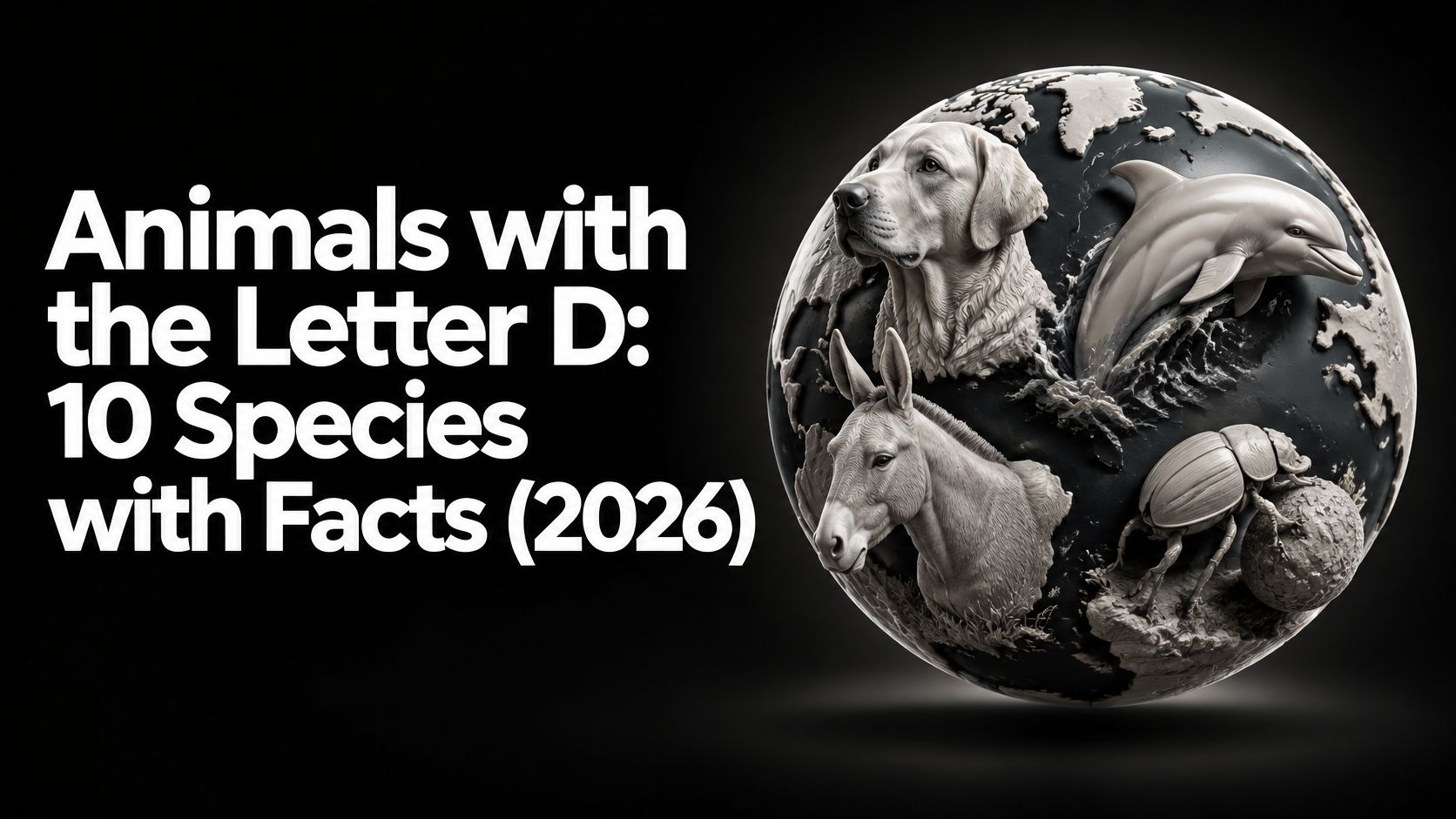
“Animals with the letter D” can mean a wild species, a broad animal group, a domesticated animal, or even an extinct bird. That distinction matters: a database of D-starting animals lists far more entries than a short children's vocabulary list, because the two are counting different kinds of names.
Dogs and dolphins get most of the attention, but the letter D covers wildlife that writers often misstate. This list gives each animal a habitat, a fact with a source where one is available, and a practical publishing check. It also compares a robotic animal paragraph with a more specific rewrite, then shows how to use Unflag's AI Humanizer, which is free to start, to tighten a draft before it goes live.
The strongest animal writing doesn't stack generic traits. It names what an animal does, where it does it, and what the evidence supports. For a quick vocabulary exercise, a common name may be enough. For an educational article, identify whether the entry is a species, a family, a breed, or an extinct animal, then verify the relevant facts.
Table of Contents
- 1. Dog (Canis lupus familiaris)
- 2. Dolphin (family Delphinidae)
- 3. Donkey (Equus africanus asinus)
- 4. Dragonfly (order Odonata)
- 5. Dingo (Canis dingo)
- 6. Deer (family Cervidae)
- 7. Dove (family Columbidae)
- 8. Dugong (Dugong dugon)
- 9. Dhole (Cuon alpinus)
- 10. Dung beetle (family Scarabaeidae)
- Ten D Animals at a Glance
- Turn the Fact Checks Into a Publishing Checklist
1. Dog (Canis lupus familiaris)
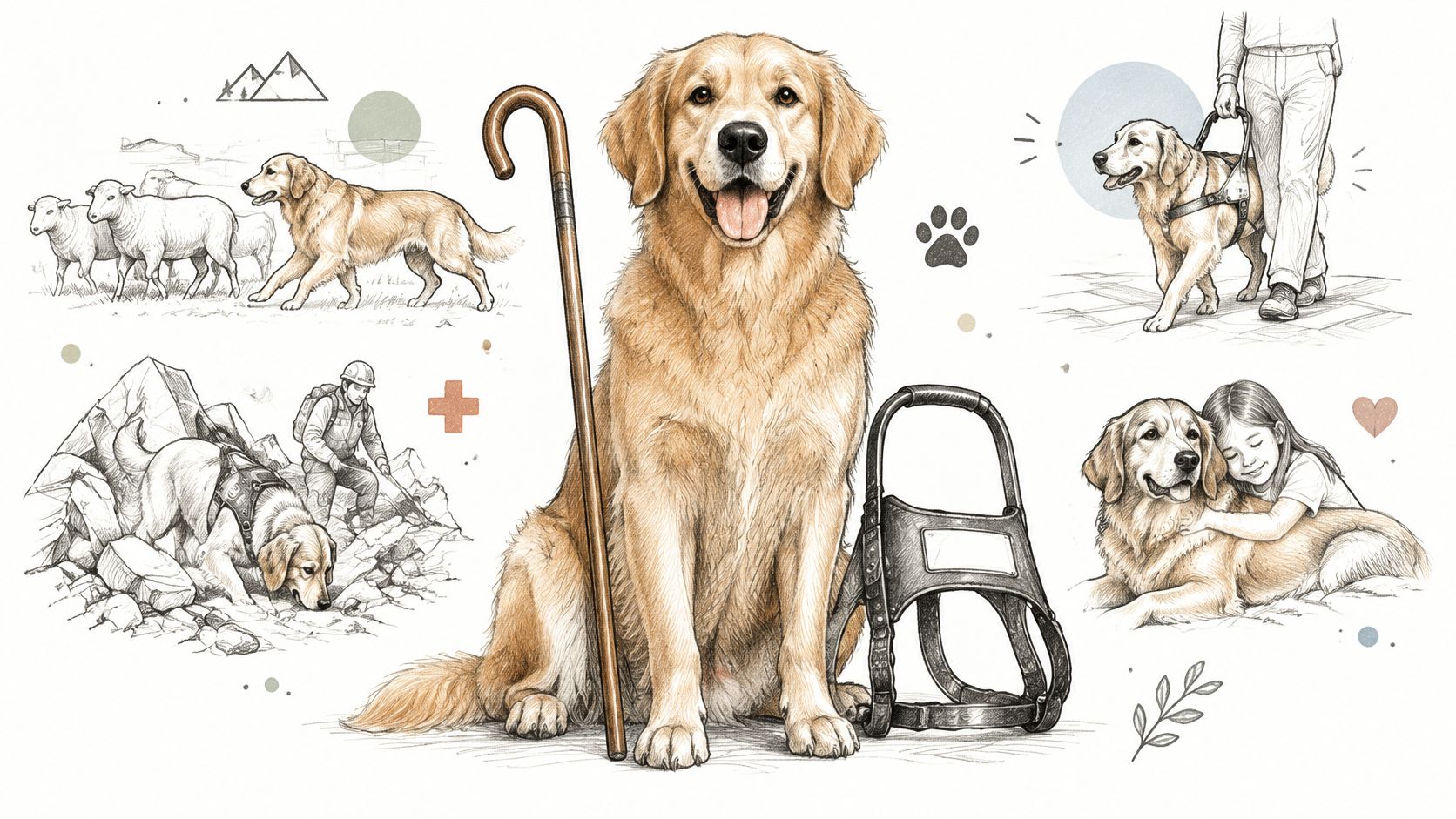
A dog is a domesticated canine, but “dog” isn't a precise breed or behavior description. For a useful example, name the job: a Border Collie can herd livestock, while a guide dog is trained to help a person get around. Those details give readers something concrete without implying that every dog has the same instincts or abilities.
Dogs live alongside people in homes, on farms, and in working environments. Their roles include companionship, herding, guidance, and scent detection. A typical use case for an animal article is a short passage about detection dogs at customs or with police agencies. Describe the task rather than making a broad claim about how dogs behave.
Make the detail do the work
Generic AI writing often strings together familiar labels: loyal, intelligent, and friendly. A more human sentence connects one observable behavior to its purpose: “A guide dog pauses at a curb so its handler can assess the crossing.” Keep health and breed claims tied to veterinary or university sources, and don't turn one trained dog's behavior into a claim about every dog.
Before submitting a draft, you can check its phrasing with Unflag's AI Detector. For a fact-heavy passage, use a fact-checking guide for animal content to keep names, behaviors, and sources aligned.
Writing rule: Name one specific job or behavior, then explain what the animal does.
2. Dolphin (family Delphinidae)
“Dolphin” names a diverse family, not one uniform animal. The Animal Diversity Web account of Delphinidae describes 37 living species across 17 genera. Members of the family live in marine environments, and some also inhabit estuaries or rivers. Many use echolocation and coordinated group hunting, but the details vary by species.
Bottlenose dolphins are among the best-known dolphins. Writers often discuss their social behavior, communication, and cognition, but each claim needs careful wording. A study about a specific animal in a particular setting doesn't prove that every dolphin species has the same ability or behavior.
A practical example is a paragraph about coastal fisheries. Explain the local conservation issue, such as dolphins being caught unintentionally in fishing gear, rather than writing that all dolphins face the same threat. Population figures need the same care: NOAA Fisheries reports that the global population of Atlantic spotted dolphins is unknown, while its estimates apply to specific U.S. stocks. The NOAA Fisheries conservation page distinguishes those stock estimates from a complete global count.
Keep the evidence in scope
When you write about a mirror test or another cognition study, identify the species and what the experiment tested. Don't stretch a narrow finding into a sweeping statement about animal intelligence. The guide to spotting LLM hallucinations can help flag claims that sound definitive but need a primary source.
3. Donkey (Equus africanus asinus)
Donkeys are domesticated members of the horse family, often valued for transport and farm work. Their typical settings include rural communities, dry regions, and rough trails where people use them to carry supplies. A mountain-trail example works well because it links the animal to a recognizable task instead of relying on broad adjectives such as “hardy.”
Donkeys and mules aren't interchangeable names. A mule is a hybrid animal, while “donkey” refers to the domesticated animal named above. This is an easy distinction to lose in a short list, especially when a writer tries to vary wording for style. Accuracy matters more than avoiding repetition.
A useful passage might describe a donkey carrying feed along a steep farm track, then explain why the animal's role matters to the people using it. Other contexts include donkey-assisted therapy programs and sanctuaries caring for working animals. Historical claims about domestication need an archaeological or zoological source; don't add an exact date without one.
Rewrite without losing meaning
Repetitive sentence openings can make a long animal guide feel mechanical. You can use the Unflag Paraphrasing Tool to vary sentence structure, then check that the revision hasn't changed a species name or introduced a new factual claim.
4. Dragonfly (order Odonata)
A dragonfly's life is split between water and air. The young insect, called a nymph, lives underwater before emerging as an adult flyer. That habitat shift gives writers a concrete way to explain why ponds, wetlands, and freshwater edges matter to dragonflies.
Dragonflies belong to the order Odonata, which also includes damselflies. Don't treat the two as the same insect. One field mark helps: damselflies often fold their wings at rest, while dragonflies usually hold theirs out to the sides. Confirm the species name with a field guide or an entomology resource before publishing a caption or identification.

Write the habitat, not a generic fact
A garden pond or wetland survey makes a useful example because it connects the insect to a real place. Avoid saying that dragonflies prove water is clean unless you have a named, regional source that supports that conclusion. “Dragonflies are linked to freshwater habitats” is safer than turning a broad ecological relationship into a specific water-quality verdict.
For a practical article, describe what readers can observe: an adult hunting above a pond, or a nymph living below the surface. Tie any claim about population declines to a regional study. Without that context, readers can't tell which species or location the claim applies to.
5. Dingo (Canis dingo)
The dingo is a wild canid found mainly in Australia. It lives in diverse environments, and its place in the ecosystem is often discussed alongside debates about livestock protection and wildlife management. Those debates need more than a slogan. Explain the competing concerns: farmers may focus on risks to livestock, while conservationists may emphasize the dingo's ecological role.
A typical example is a report about dingo management near sheep country. The dingo fence is often mentioned in this context, but don't attach a precise length or claim about its effectiveness without a reliable source. The same rule applies to population estimates and livestock losses. Name the source and define what it measured.
Separate history from current policy
Claims about when dingoes arrived in Australia are contested and should be attributed to the research being discussed. Don't present one proposed date as settled fact. If an article makes a disputed claim about origins, hybridization, or management, check whether the source supports the exact wording.
For a policy passage, show what each side is trying to protect and where their priorities conflict. Run contested wording through Unflag's Fact Checker, then verify any flagged claim against an appropriate source before you publish it.
6. Deer (family Cervidae)
“Deer” is a family name, not a single species. Deer live across a range of habitats, including forests and grasslands, but details such as antler growth and diet differ among species. Write “white-tailed deer” or “red deer” when that's the animal you mean. A broad label can work for a general introduction, but it won't support species-specific claims.
For instance, an article about forest management might focus on red deer in a European woodland, while a road-safety piece could discuss white-tailed deer in North America. These are different use cases, so don't transfer a population estimate or behavior claim from one to the other. Cite a wildlife agency for population figures and name the region it covers.
“A common name can introduce an animal. A species name makes the fact check possible.”
Antlers are another place where writers overgeneralize. Many male deer of many species grow and shed antlers, but don't turn that pattern into an absolute statement about every deer. Specify the species and the source when the distinction matters.
Edit for variety, keep the claim precise
Repeated openings can make a deer guide sound formulaic, but sentence variety shouldn't come at the cost of accuracy. The short essay writing guide can help with structure. You can also use Unflag's AI Humanizer to smooth repetitive phrasing, then check that the rewrite still names the right deer species.
7. Dove (family Columbidae)
Doves and pigeons belong to the family Columbidae. Common names don't always map neatly onto a scientific distinction, so use a species example when the difference matters. A mourning dove at a backyard feeder is more precise than a sentence that treats every “dove” as the same bird.
The birds live in many kinds of environments, from urban neighborhoods to open country. Their soft calls and pair behavior often feature in wildlife writing, while their symbolic role appears in art and religion. A useful cultural example is Picasso's Dove of Peace, created for the 1949 World Peace Congress in Paris. Check that art-history detail against a museum or archive source before using it as a caption or central claim.
Homing pigeons are closely related and provide a distinct practical example: people have used them for message delivery and racing. Don't blur that history with claims about every dove. An article about a bird feeder, a racing club, and a peace symbol needs different sources because each makes a different kind of claim.
Keep symbolism attached to its context
The association between doves and peace has a history shaped by religious texts and modern art. Explain the context rather than presenting the symbol as a universal meaning shared across every culture. If you can't verify a specific reference, describe the symbolism cautiously and leave out unsupported origin stories.
8. Dugong (Dugong dugon)
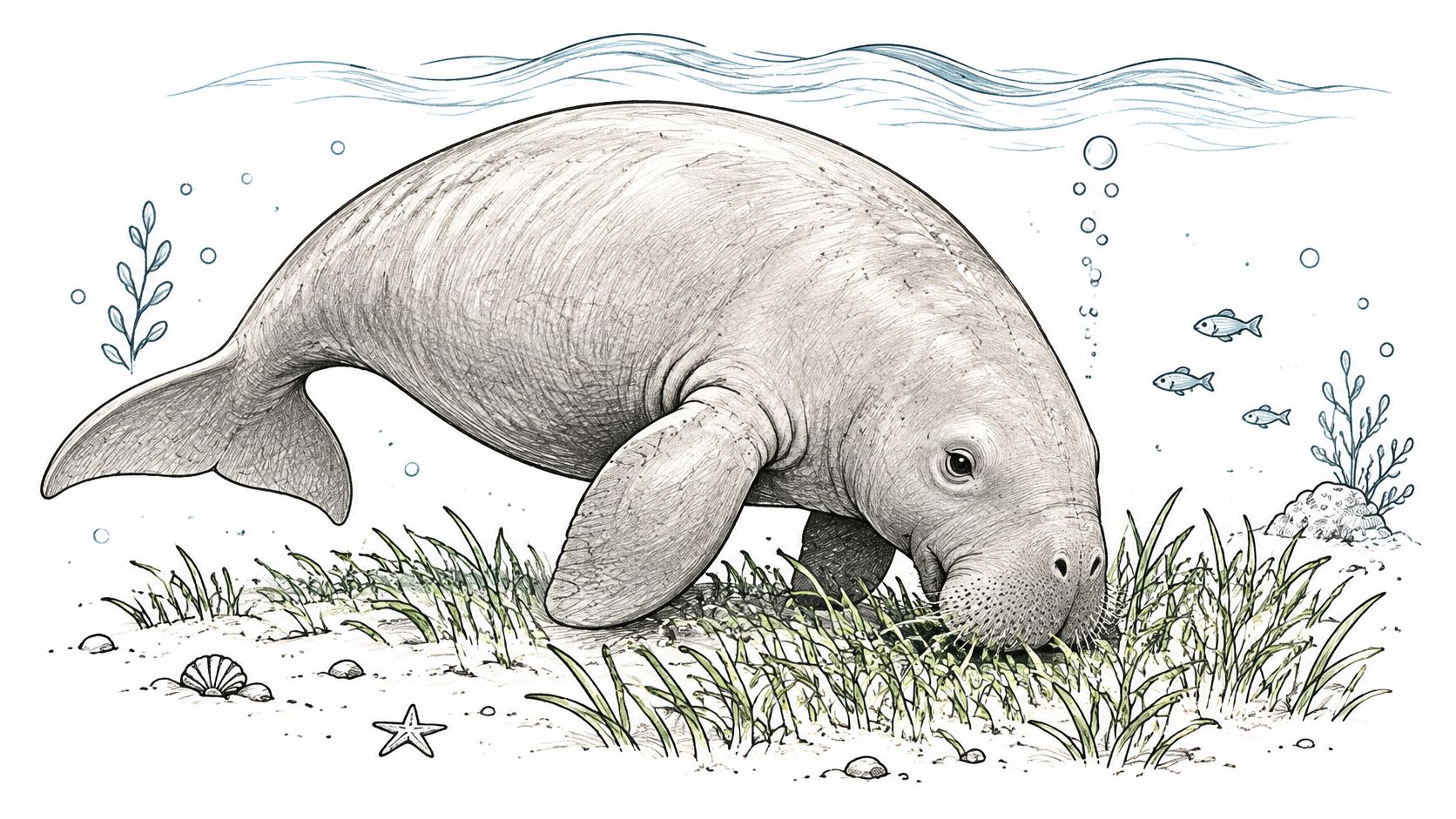
Dugongs are large marine mammals that graze on seagrass in shallow coastal waters across the Indo-Pacific. Their habitat connects the animal's survival to coastal ecosystems, so a useful passage should explain the seagrass link rather than calling dugongs “gentle.”
A typical example is a seagrass restoration project in an area where dugongs feed. That makes the habitat connection clear without implying that one restoration effort guarantees a population will recover. Writers can also discuss protection zones in the Red Sea or Southeast Asia, but should identify the location and verify the details with a marine research or conservation source.
Verify status before using a label
Conservation categories can change. Check the current IUCN Red List entry before describing the dugong as threatened, and make clear which assessment you mean. Don't add population estimates unless you can cite a source that explains the region and method.
Habitat check: Connect the dugong to seagrass, then support any claim about its conservation status with a current assessment.
9. Dhole (Cuon alpinus)
The dhole, also called the Asian wild dog, is a canid native to Asia. It hunts in packs and communicates with whistles and other calls. A practical example is a camera-trap survey in a forest reserve: the footage may document dhole presence, but it shouldn't be treated as a population count unless the study supports that interpretation.
The Smithsonian's dhole conservation page describes close-knit packs that typically contain 3–20 individuals and explains that dholes coordinate during cooperative hunts. The same source identifies threats including habitat conversion, reduced prey, hunting, and disease. Keep those threats attached to the regions and evidence being discussed instead of implying that every pressure has the same impact everywhere.
Check the label and the location
The dhole is often described as endangered, but verify the current IUCN Red List entry before publishing a status label. Pair any conservation statement with the species' range and the specific threat you're describing. A claim about habitat loss in one region doesn't automatically describe conditions across the entire range.
Use Unflag's Fact Checker to review distribution and status claims, then consult the cited conservation source directly. That extra check can catch a draft that has the right general idea but assigns it to the wrong location or assessment.
10. Dung beetle (family Scarabaeidae)
Dung beetles feed or breed in animal dung. They help move and bury it, returning nutrients to the soil and supporting ecological processes. A farm or pasture makes a useful example: instead of calling the beetles “nature's cleaners,” explain that they work with dung and contribute to nutrient cycling.
Some dung beetles also orient themselves using celestial cues. Research in controlled arena experiments found that beetles exposed to directional cues, including stars and the Milky Way, followed straighter, shorter paths than beetles in darker or weak-star conditions. The study on celestial navigation in dung beetles also found that illumination affected their direction of travel. That's a specific finding about tested conditions, not proof that every dung beetle travels in the same way.
Don't turn one species into the whole family
Dung beetles vary in behavior, so name the species when a navigation or ecological claim depends on it. A typical use case is a passage about how beetles find dung on a pasture at night. Keep the behavior tied to the study's conditions, and don't add a claim about pest control or agricultural benefits unless you have a source for that point.
Ten D Animals at a Glance
| Item | Group | Main Habitat | Main Threat or Risk |
|---|---|---|---|
| Dog (Canis lupus familiaris) | Domesticated canid | Homes, farms, and cities worldwide | Breed-specific health problems |
| Dolphin (family Delphinidae, including the bottlenose dolphin) | Toothed whale | Oceans and some rivers worldwide | Fishing bycatch and habitat pollution |
| Donkey (Equus africanus asinus) | Domesticated equid | Dry and mountainous regions | Poor welfare conditions for working animals |
| Dragonfly (order Odonata) | Insect | Freshwater wetlands | Pollution and habitat loss |
| Dingo (Canis dingo) | Wild canid | Australian deserts, forests, and coasts | Livestock conflict and hybridization with domestic dogs |
| Deer (family Cervidae) | Hoofed mammal | Forests and other habitats across most continents | Vehicle collisions; chronic wasting disease in some species and regions |
| Dove (family Columbidae) | Bird | Suburban areas and other habitats worldwide | Hunting pressure in some regions |
| Dugong (Dugong dugon) | Marine mammal | Shallow Indo-Pacific coastal waters and seagrass beds | Bycatch, boat strikes, and seagrass habitat loss |
| Dhole (Cuon alpinus) | Asian wild canid | Forests, grasslands, and mountains across Asia | Habitat loss and declining prey |
| Dung beetle (family Scarabaeidae) | Beetle | Dung-rich habitats on most continents | Habitat loss in some regions |
Turn the Fact Checks Into a Publishing Checklist
Choose the animal you plan to write about, then identify what the common name represents. “Dove” and “deer” can refer to broad groups, while a name such as “dugong” points to a particular species. Mark each entry as a species, a family or order, a domesticated animal, or an extinct animal before you draft. That small edit prevents a list from presenting unlike categories as equivalent.
Next, match the fact to the right source. Use a species account for a behavior claim, a wildlife agency for a population estimate, and a current conservation assessment for status. Check that the source covers the same animal and region as your sentence. If the evidence is about one dolphin stock, don't present it as the total population of all dolphins.
Editorial rule: A fact without its species, place, and source is usually too broad to publish as written.
Now make the prose specific. Replace “dolphins are intelligent and social” with a sentence about a named species and a documented behavior. Replace “deer grow antlers” with a species-specific statement supported by the right reference. A detail earns its place when it helps readers picture the animal or understand why the fact matters.
Before publication, paste the draft into Unflag's AI Humanizer, it's free, and revise any phrasing that sounds repetitive. Then check the same text with the AI Detector and Fact Checker. A detector score can help you review the writing, but it doesn't verify animal facts. Confirm flagged claims against the original sources and preserve precise species names during edits.
A robotic draft and a natural rewrite
Robotic: “Dolphins are very intelligent and social animals. They live in the ocean and communicate with each other. They are fascinating creatures.”
More specific: “Oceanic dolphins live in marine habitats, and many use echolocation to find food. The dolphin family includes multiple species, so describe the animal you mean before assigning it a particular behavior.”
The rewrite does more than vary sentence rhythm. It narrows the claim and avoids treating every dolphin as interchangeable. For animal content, a natural voice comes from concrete details and careful scope, not from swapping in decorative adjectives.
A polished sentence still needs a source. A checked sentence needs the right source for the animal it names.
Use this process for school assignments, SEO articles, captions, and conservation explainers. When a claim can't be verified, qualify it or remove it. Then invite an editor or reader to follow the citation back to the evidence. That's how a quick list of animals with the letter D becomes a resource people can trust and cite.
Use Unflag to humanize repetitive animal drafts, paraphrase for clearer flow, and review text for AI signals and unsupported claims. Paste your list into the AI Humanizer, then check the species names and sources with the Fact Checker before publishing.
More guides
View allAnswer a Question Clearly and Concisely in 2026
Learn how to answer a question clearly and concisely, with answer shapes for each question type, a four-step structure, and fixes for common mistakes.
Correct Parallel Structure: Rules and Fixes
Learn how to correct parallel structure with a fix table, five editing steps, correlative pairs, and practice sentences you can use today.
Base Word Examples: 8 Root Families with Derived Forms
Base word examples for 8 root families, with derived forms, sample sentences, and natural rewrites that show how each word shifts in use.
How to Rewrite Text Without Losing Your Meaning
Learn how to rewrite text for clarity, tone and originality while keeping its meaning, with a step-by-step workflow, examples and final checks.